
Last updated October 30, 2026
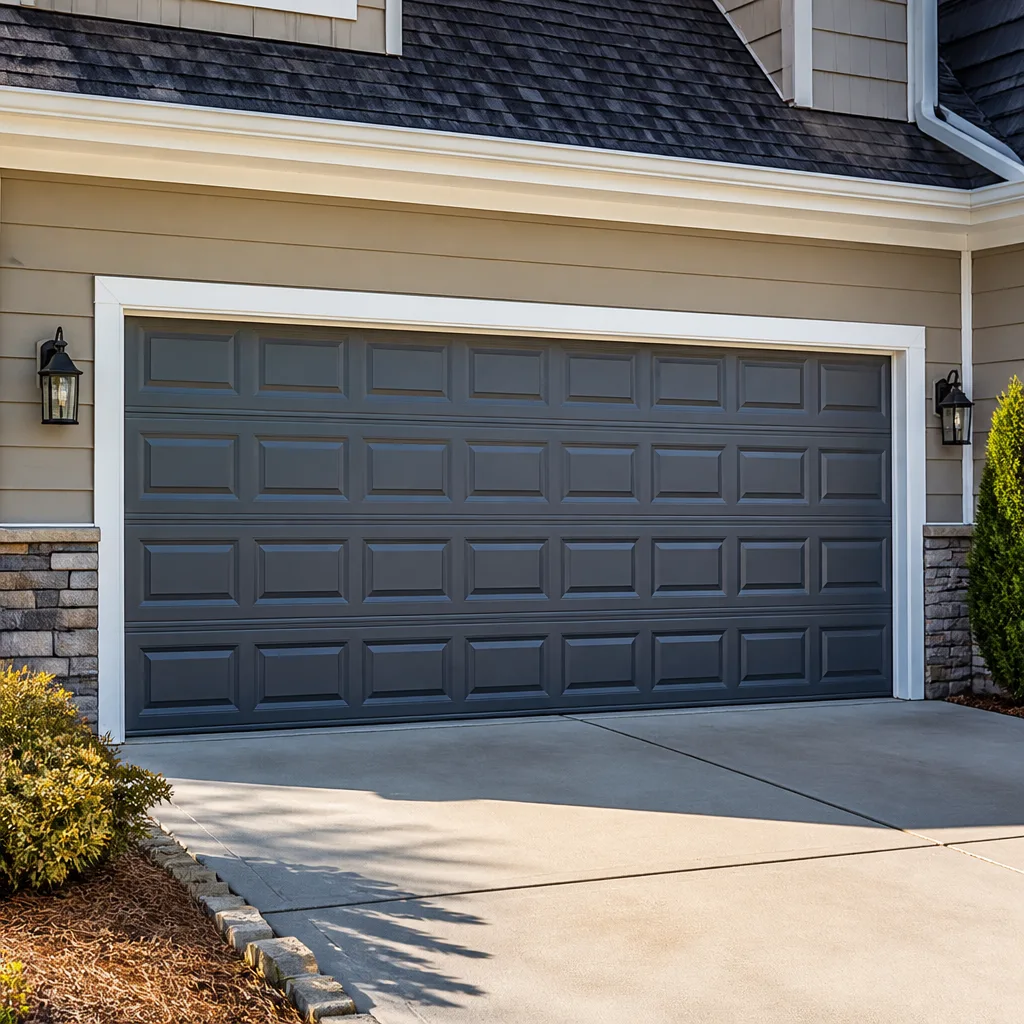 Raised-panel steel
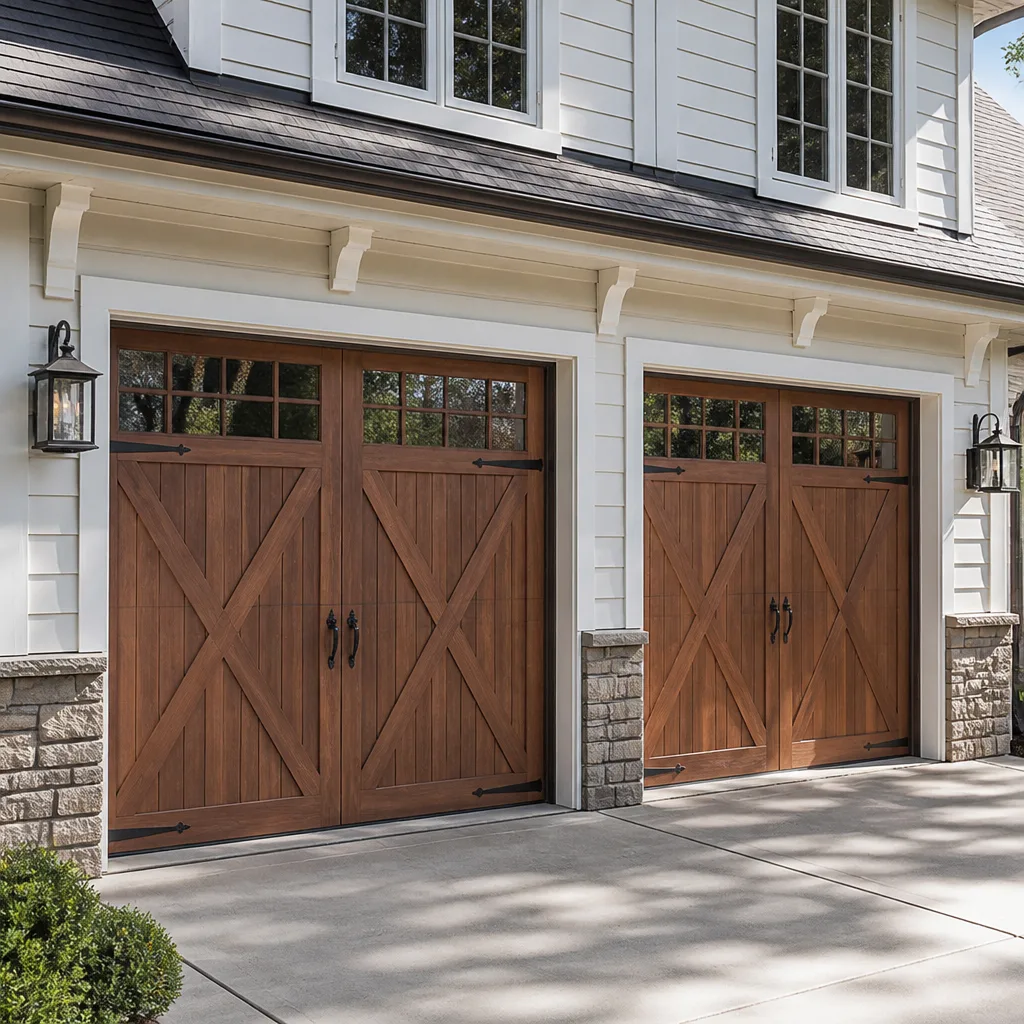 Carriage house
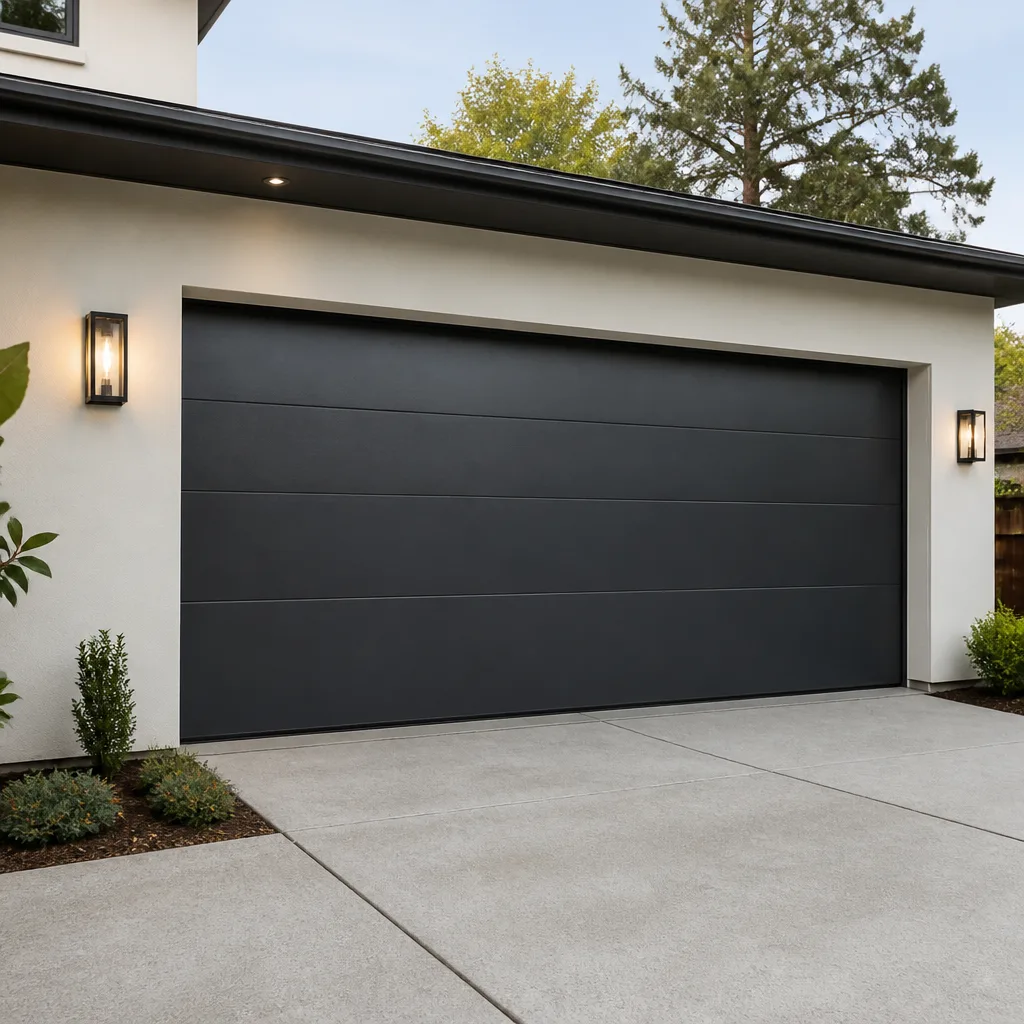 Modern flush
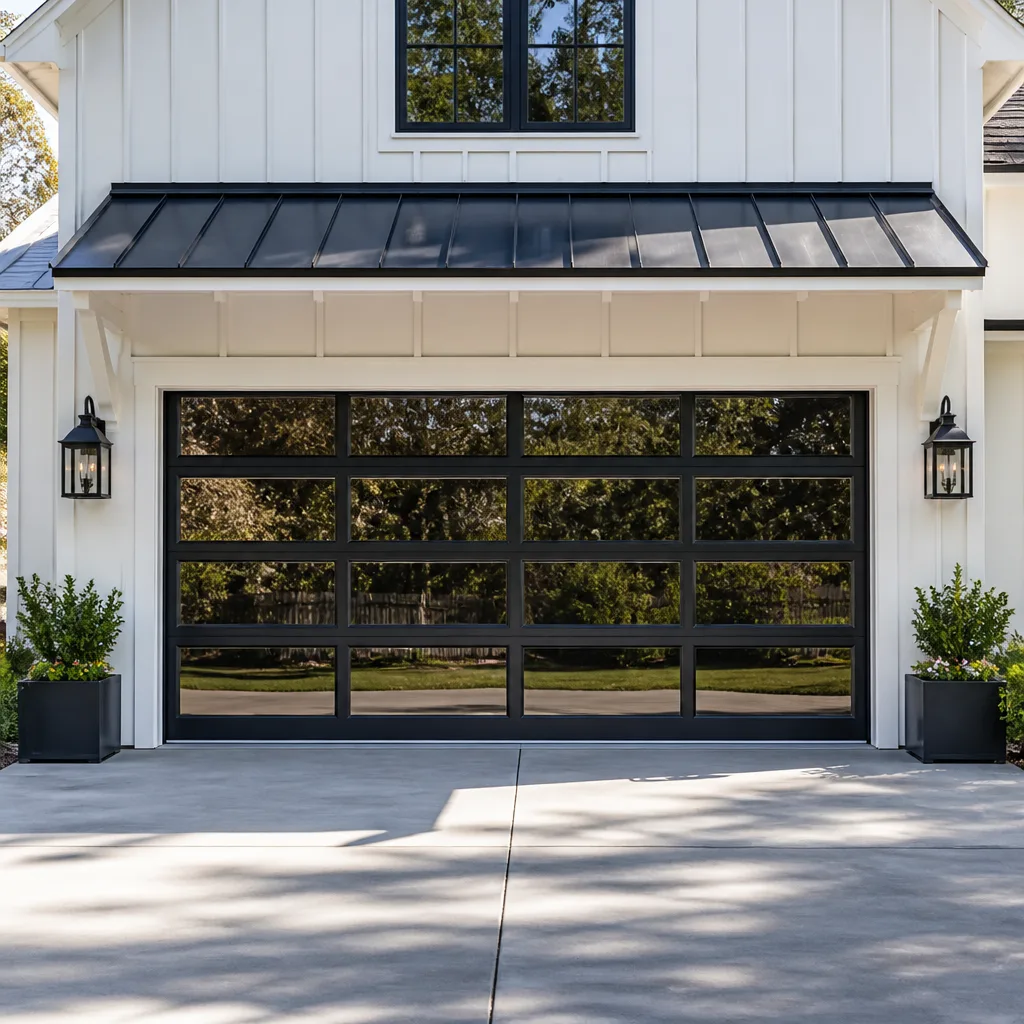 Full-view glass
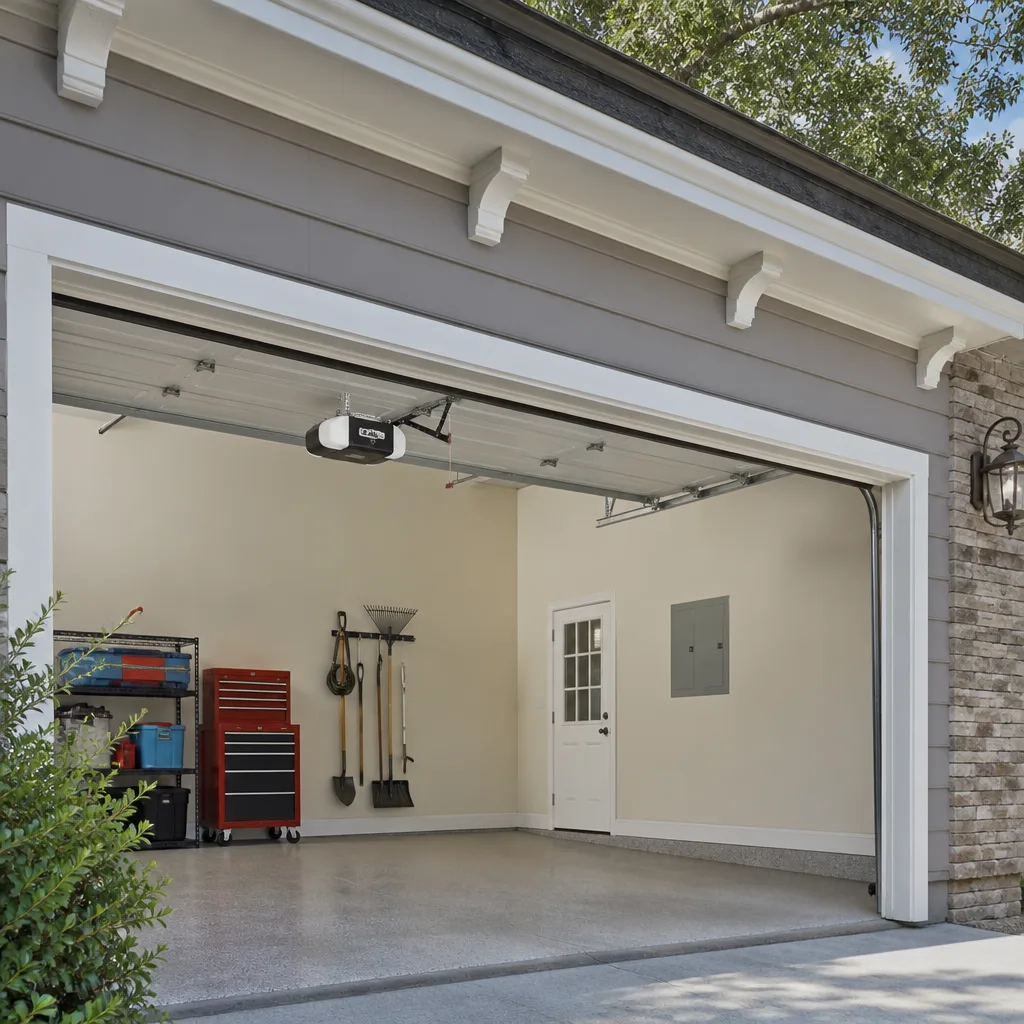 LiftMaster openers
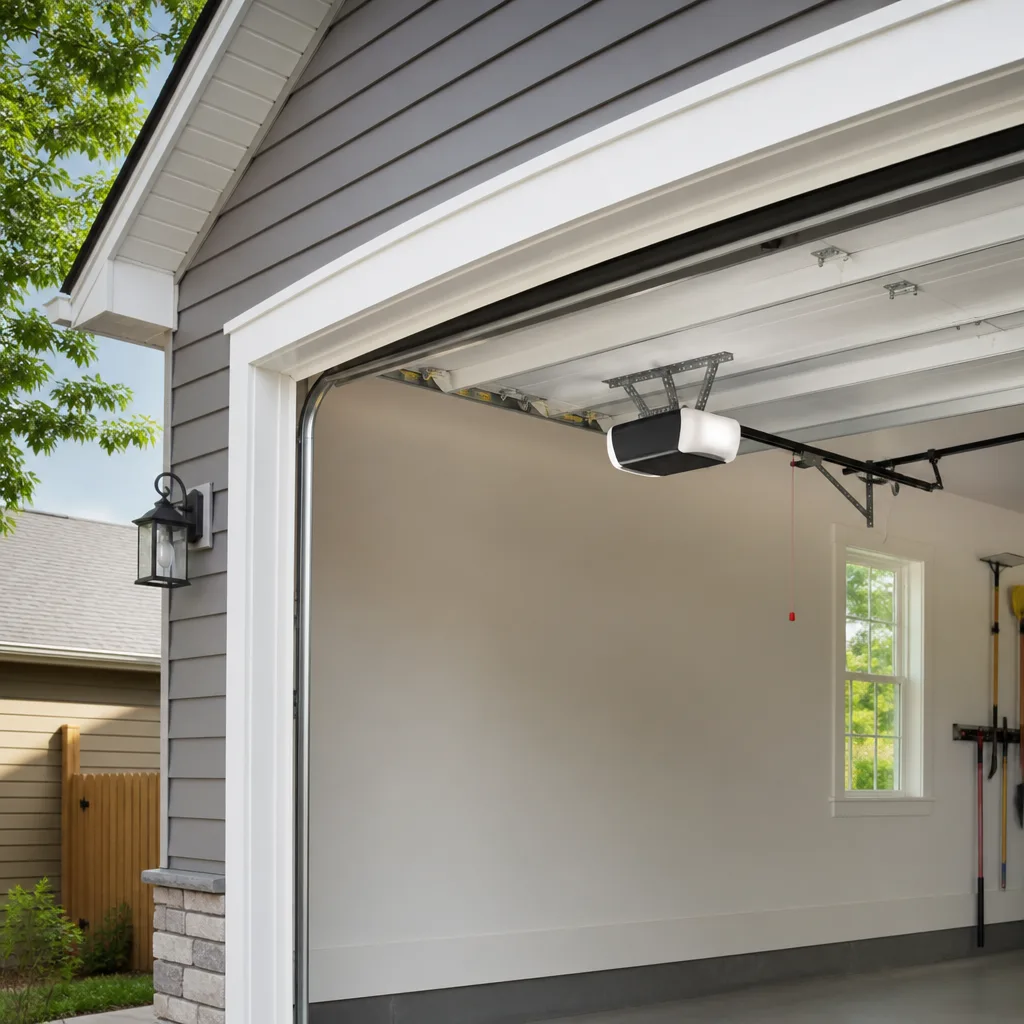 Chamberlain openers
Full 25-point door and opener safety check with every visit - springs, cables, rollers, tracks, and your LiftMaster or Chamberlain opener included
You get a price before we start. It does not change when the truck arrives.
Get your free estimateGarage Door Warning Signs: A Carlsbad Homeowner’s Reference Guide
The garage door that finally refuses to open on a Sunday morning gave you at least three warnings in the prior month. A slight grinding on cold mornings. A half-second hesitation when the opener engaged. A bottom seal that started peeling at one corner. Most homeowners in Carlsbad noticed at least one of these and filed it away as normal wear. This guide exists so the next warning doesn’t get filed away. You’ll learn which signals matter, which ones don’t, and what coastal air does to garage hardware that inland homeowners never think about. For more guides & resources, see our blog.
Quick Answer
The most useful garage door warning signs in Carlsbad are subtle changes in sound, speed, and balance: a door that hesitates before lifting, a grinding noise that appears only on damp mornings, visible rust blooming around spring coils or hinge pins, cables that look fuzzy rather than smooth, and a door that drifts down an inch after stopping. Any of these means a component is degrading. Catching them early typically means a $150 to $350 repair instead of a full spring or opener replacement.
Styles & brands we work with
Table of Contents
- The Response Time Test: A 10-Second Diagnostic You Can Run Monthly
- Spring Warning Signs: What Failure Sounds Like Before It Happens
- Cable Warning Signs: The Coastal Corrosion Signature
- Roller and Hinge Warnings: When Noise Is Location Data
- Opener Warning Signs: Smart Systems, Mechanical Limits
- Panel and Weather Seal Warnings: What Marine Layer Does to Surfaces
- Coastal Corrosion: A Visual Inspection Guide for Carlsbad Homes
- Triage: Same-Week Repair vs. Same-Day Emergency
- Common Mistakes to Avoid
- When to Call a Professional
- Frequently Asked Questions
The Response Time Test: A 10-Second Diagnostic You Can Run Monthly
Here’s a diagnostic that costs nothing and catches most major failures before they happen. Stand where you can see the full door and press the opener button. Count the seconds between pressing the button and the first visible movement of the door. A healthy garage door in Carlsbad starts moving within one second. If the door waits two full seconds before responding, and that delay is consistent rather than occasional, the opener motor or the logic board is working harder than it should. On a LiftMaster or Chamberlain opener, that lag often precedes a capacitor failure by three to six weeks. On a Genie, it can mean the drive belt tension is drifting.
The second half of the test happens when the door reaches the top. Release the button mentally and watch what the door does. A properly balanced door holds position without drifting. If the top section sags downward by half an inch or more after the motor stops, the extension or torsion springs are losing tension. That sag is the earliest reliable indicator of spring fatigue, and it appears weeks before any visible gap or break.
Here’s the monthly sequence, start to finish:
- Stand clear of the door path. This is observation, not interaction. You won’t touch anything.
- Press the opener button with the door fully closed and note the time to first movement. One second or less is normal.
- Listen during the first foot of travel. A smooth hum is fine. A groan, grind, or chatter means metal on metal somewhere. Make a mental note of where the sound seems to come from, left or right side.
- Watch the door as it reaches full open. Does it stop cleanly or bounce slightly? Does it drift down after stopping?
- Look at the bottom seal from inside the garage. Daylight peeking through at any point means the seal has compressed or torn. In Carlsbad, that gap is how damp air enters and accelerates rust on everything inside.
- Repeat the process when closing. Watch the descent. A healthy door closes at a steady, even pace. Jerky movement or sudden acceleration downward means balance is off.
The whole test takes about 30 seconds once you get used to it. It won’t replace a professional inspection, but it will tell you when one is actually needed. We’ve had Carlsbad homeowners catch a failing spring through this test and call us before the spring snapped. That’s the difference between a scheduled repair and an emergency call with a door stuck halfway open.
Spring Warning Signs: What Failure Sounds Like Before It Happens
Garage door springs are the most dangerous component in the system. They hold hundreds of pounds of tension, and when a torsion spring breaks, the release of energy is sudden and loud, often described as a gunshot. But springs almost never fail without warning. The signs are there, and they’re learnable.
The earliest warning is the door drifting down after opening. That half-inch or inch of sag we mentioned in the response time test is the spring system telling you it’s lost the precise tension that keeps the door perfectly balanced. A balanced door stays where you leave it. A door with weakening springs doesn’t.
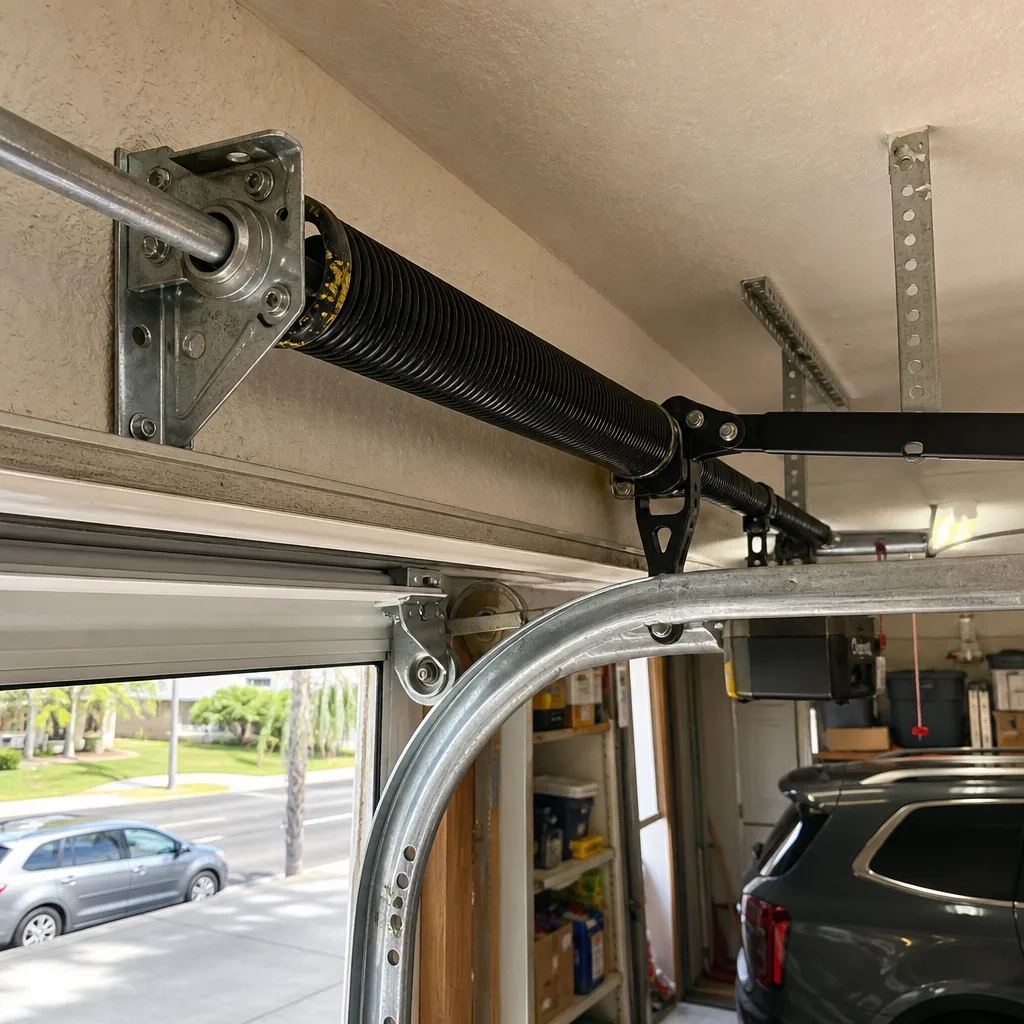
The second warning is visual, and on a torsion spring mounted above the closed door, it’s visible without disassembling anything. Look at the gap between the spring coils. On a new or healthy spring, the coils are evenly spaced with consistent gaps. On a fatigued spring, you’ll see an irregular pattern: some coils tighter together, some wider. If you see an actual separation where a coil pulled apart from its neighbor, that spring is in its final stage. It may last days, not weeks.
The third warning is what we call the cold-morning creak. In Carlsbad, mornings after a heavy marine layer leave moisture on spring coils. A healthy spring absorbs that moisture without complaint. A spring with internal fatigue will creak or pop on the first open of the day, then quiet down as the movement redistributes whatever lubrication remains. Homeowners often tell us “it only makes noise in the morning.” That pattern is not random. It’s a data point. The spring’s internal wire strands are beginning to shift against each other, and the morning damp is exposing it.
One habit worth building in Carlsbad: when you open the garage in the morning, stand to the side of the door, not directly beneath the spring line. If a spring does fail, the energy moves sideways along the shaft, not into the room. This isn’t fear mongering. It’s the same reason you don’t stand behind a horse. Trained technicians follow the same rule.
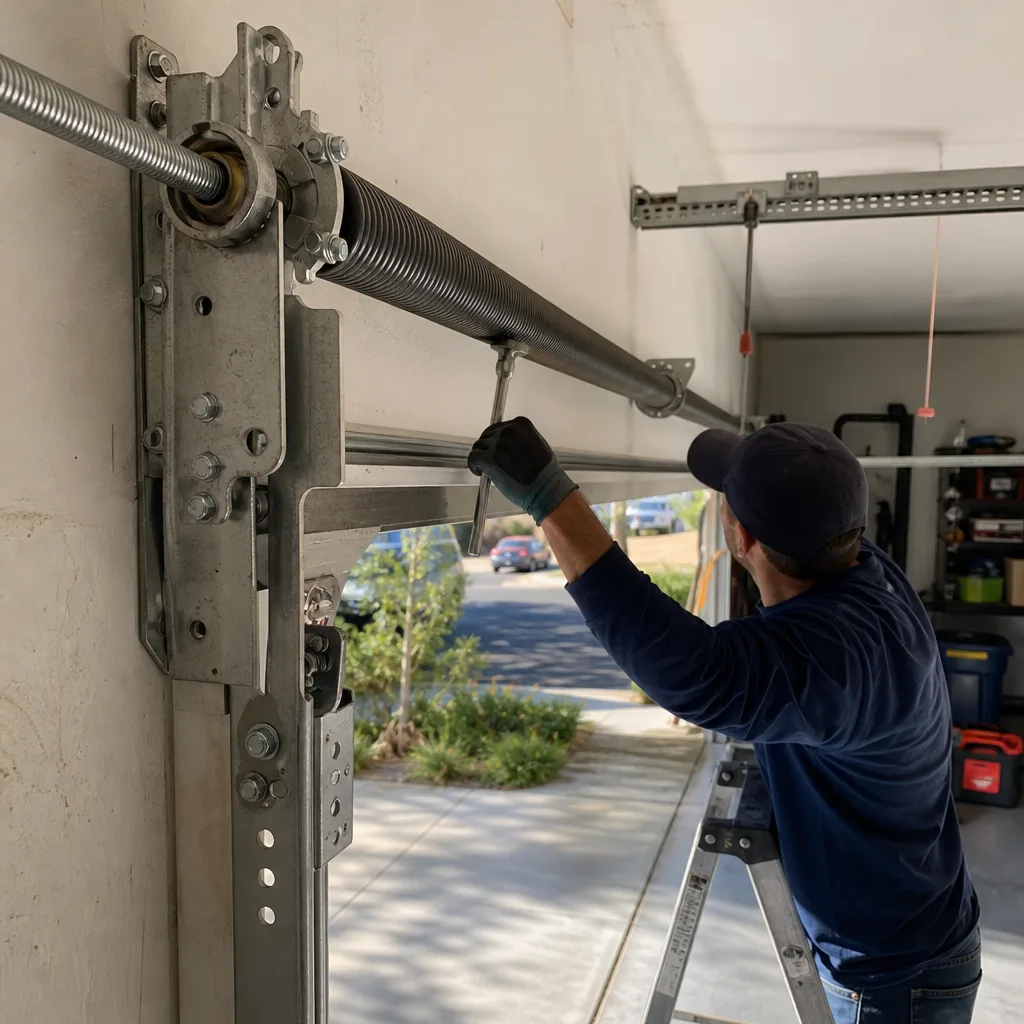
Spring replacement is a job we do routinely at Tradewind’s garage door repair service in Carlsbad, and it’s never a DIY project. The tools required to safely wind and unwind torsion springs are specialized, and the learning curve includes injuries that emergency rooms in North County see more often than you’d expect.
Cable Warning Signs: The Coastal Corrosion Signature
Garage door cables are braided steel strands, typically 7×19 construction, meaning seven bundles of nineteen wires each. They run from the bottom brackets up to the spring system or drum, and they carry the entire weight of the door when the spring system is under load. When a cable fails, the door drops suddenly on one side. That’s a serious safety event.
The coastal warning sign for cables is specific and worth knowing. In dry climates, a failing cable looks shiny or polished at the wear points. In Carlsbad, with salt-influenced air and regular morning condensation, a failing cable looks different. The individual strands begin to separate from the bundle, creating a fuzzy or hairy appearance along the cable’s length. This is called birdcaging in the trade, because the strands flare outward like a wire birdcage. It starts subtle: a quarter-inch section where two or three strands have lifted. Over weeks, the section grows. If you run a gloved hand lightly along the cable and feel raised strands or snags, that cable is compromised.
The second coastal signature is rust at the crimped end fittings. Look at the bottom bracket where the cable attaches to the door. In Carlsbad, this is the first place rust appears on a cable system, because that bracket sits low, catches moisture from the concrete, and never fully dries during damp weeks. Surface rust on the bracket itself is normal and manageable. Rust that has moved into the cable where it meets the crimp is not. If you see flaking, orange-brown powder on the cable itself, or if the strands near the fitting appear reduced in diameter, the cable’s load capacity is dropping. It should be replaced before it’s tested again.
Here’s a simple visual triage for cables on Carlsbad homes:
- Smooth, uniform cable with light surface discoloration: Normal for a coastal garage. Lubricate annually and continue monitoring.
- One or two lifted strands, no rust at fittings: Early wear. Schedule a repair in the next few weeks. This is not an emergency yet.
- Visible birdcaging over a section longer than an inch, or any rust inside the cable bundle: Same-week professional repair. The cable is losing integrity.
- Cable has slipped off the drum while the door is open: Do not operate the door. Same-day emergency call. The door is being held by only one side, and that’s a dangerous unbalanced load.
Cable replacement involves releasing spring tension, which is the single most dangerous operation on a garage door. This is not a tutorial. It’s a warning: call a professional. If you’re evaluating who to hire, read our guide on How to Hire a Garage Door Contractor in Carlsbad: A Step-by-Step Guide. The cost of a cable replacement in Carlsbad is far lower than the cost of a dropped door, and that’s the tradeoff every homeowner should weigh.
Roller and Hinge Warnings: When Noise Is Location Data
A noisy garage door is the most commonly ignored warning sign, partly because all doors make some noise and partly because the noise builds gradually enough that homeowners normalize it. But noise is information, and the location of the noise tells you which component is wearing.
Rollers are the small wheels that guide the door up the curved track. They’re either steel, nylon, or nylon-coated steel, and they rotate on a bearing at the center. A failing roller bearing produces a characteristic sound: a high-pitched squeal or a rattle that’s most noticeable when the door is in motion but disappears when it stops. The sound comes from a specific point on the track, usually one of the middle sections. If you can localize the noise to a single roller, the diagnosis is straightforward. That roller’s bearing has worn out, and the wheel is dragging rather than rolling.
In Carlsbad, roller failure has a moisture dimension. The coastal air accelerates corrosion on unsealed steel bearings. A roller that would last eight years in Temecula might last five or six years in Carlsbad. When the bearing corrodes, the roller stops rolling and starts sliding along the track. The sliding wears a flat spot on the roller’s surface, and from that point, the noise becomes a rhythmic thumping or clicking that matches the roller’s rotation speed. That sound, a click-click-click that changes pace with the door’s speed, is a classic failing roller signature.
Hinges make a different sound. A failing hinge produces a creak that rises and falls with the door’s movement, similar to an old door in a house. The hinge itself rarely breaks in normal use, but the hinge pin wears, or the hinge plate loosens at the screws that attach it to the panel. Loose hinge screws are common on doors with rust-compromised screw holes, which is a coastal-specific problem we see frequently in Carlsbad garages. The salt air works into the screw threads, corrosion expands slightly, and the screw loses its grip. You may notice one panel looking misaligned at the hinge point, or you may see a gap where the hinge plate sits proud of the panel surface.
The practical rule: squealing at one point is a roller. Creaking that follows the door’s entire travel is a hinge. Rattling that sounds like loose hardware is probably a roller that’s fully seized or a hinge with backed-out screws. None of these are good to ignore. Rollers seize completely, and when they do, the door can jam mid-travel and stress the opener motor repeatedly until a second component fails. That’s how a $12 roller replacement becomes a $350 opener repair.
Our team at Tradewind Garage Door Repair works across hinge and roller types from Clopay, Amarr, and Wayne Dalton doors, and the repair path is usually straightforward: replace the worn roller, tighten or replace the hinge, and check track alignment. The door runs quieter, the opener works less hard, and the clock resets.
Opener Warning Signs: Smart Systems, Mechanical Limits
Garage door openers run on either chain, belt, or screw drive mechanisms, and each has a distinct failure profile. LiftMaster and Chamberlain openers share many internal parts, since they come from the same manufacturer. Genie openers use a different architecture. Craftsman, which sourced openers from various manufacturers over the years, benefits from the same diagnostic approach. What matters most is recognizing the opener warning signs that appear before total failure.
The first signal is hesitation on start. A healthy opener engages the drive immediately and moves the door without pause. An opener whose motor capacitor is failing will hum for a beat before the door moves. You hear the motor running, but nothing happens for half a second or a full second. That pause is the capacitor struggling to deliver the starting torque the motor needs. Capacitors fail in stages, and the hesitation is the pre-failure stage. If you catch it now, a technician replaces a $30 part. If you wait, the capacitor fails fully, the opener won’t start at all, and on some models the failure can damage the motor windings.
The second signal is a door that reverses on its own. Modern openers have force settings that detect resistance and reverse direction to prevent pinning or crushing. When the force threshold is set correctly, the door only reverses if it hits a real obstruction. When the threshold drifts low, or when track resistance increases due to roller wear, the opener senses false obstructions and reverses unexpectedly. If your door goes down halfway and then comes back up without any visible obstruction, the opener is telling you something. It may be calibrated wrong, or it may be compensating for a mechanical problem in the door itself. Either way, the warning should not be overridden. The force setting exists for safety, and cranking it up to fix a reversing door is how people get hurt.
The third signal is the smart-home failure mode: the opener works fine with the wall button but won’t respond to the app, or responds intermittently. On later-model LiftMaster and Chamberlain units with MyQ connectivity, intermittent app failures can mean a failing logic board or a dying backup battery. On Genie systems with Aladdin Connect, the symptom is similar. The opener’s mechanical function remains sound, but the control board’s communication is degrading. This is a repair, not a replacement scenario. At Tradewind, our garage door opener repair service in Carlsbad handles these board-level issues without pushing a new opener unless the board is genuinely beyond saving.
The fourth signal is the one most homeowners never hear because they never stand in the garage with the opener exposed: a tightening or grinding sound from the opener head itself during only the first few inches of travel. That’s the drive gear or sprocket wearing. LiftMaster and Chamberlain chain-drive units, especially the older ones with white plastic gears, are known for this. The gear strips gradually, and the mechanical noise changes pitch as the door passes the first section. Replace the gear and you extend the opener’s life by years. Ignore it and the gear strips fully, the chain goes slack, and the opener motor spins without moving the door at all.
Over in the professional arena, these warnings translate into a simple principle: the opener is the easiest component to over-warn about and the easiest to under-maintain. Most opener failures are incremental. The warning signs are audible, visible, and testable. The only thing required is paying attention at the right moments.
Panel and Weather Seal Warnings: What Marine Layer Does to Surfaces
The panels of a garage door take a beating in Carlsbad that inland panels never face. Salt-influenced fog, morning condensation, and the occasional strong onshore wind combine to test paint, metal, and seals in ways that don’t show up in the valley heat. The panel warnings worth knowing are less about dramatic failure and more about slow, expensive degradation.
The bottom weather seal, that rubber strip along the door’s lower edge, is the garage’s first line of defense. In Carlsbad, a failed bottom seal does more than let in leaves and bugs. It lets in damp air that accelerates rust on everything stored in the garage, including the door’s own hardware. The seal fails in predictable stages. First, the corners begin to lift or fold under. Run a finger along the bottom edge of the closed door from inside the garage. The seal should sit flat against the concrete for the entire width. If it’s folded under at either corner, or if you feel gaps, the seal has compressed beyond service. Second, the rubber hardens and loses flexibility. A healthy seal is pliable. A failed seal feels stiff and may show cracking when you press it. Third, the seal tears at stress points, usually where the door rides over the concrete for years.
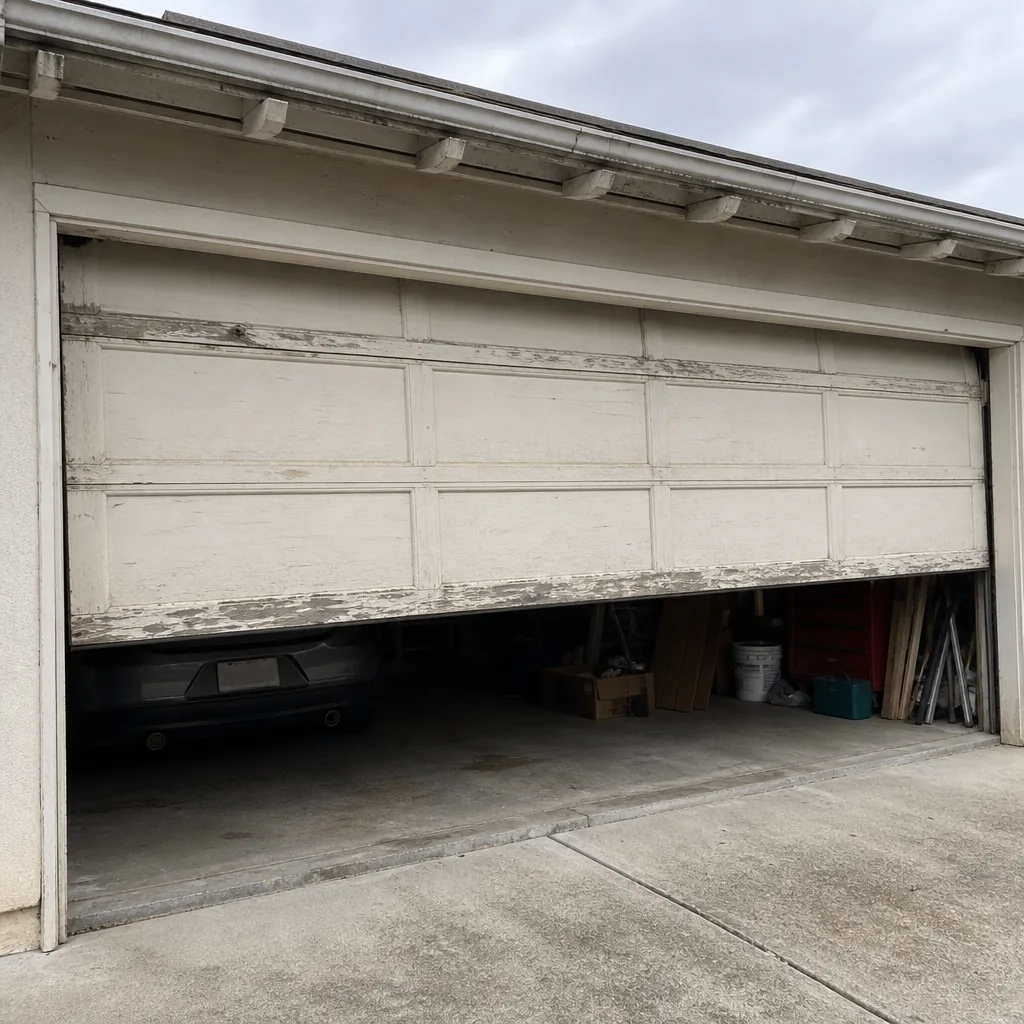
Panel separation is a different category. On steel doors from Clopay or Amarr, the panels are joined by stiles and rails, and they should sit flush against each other. If you notice a panel bulging outward or a gap opening between sections, the door’s structural integrity is compromised. In coastal Carlsbad, panel separation often starts with internal rust at the panel’s bottom edge, where water wicks upward from a failed seal. The bottom panel is the one that suffers first. You’ll see rust staining along the panel’s interior bottom lip, then bubbling under the paint, then the panel begins to bow. At that point, the panel is no longer load-bearing in the way it was designed to be. The door may still work, but the stress redistributes to adjacent panels and the hinges, accelerating their wear.
Paint failure on a Carlsbad garage door is more than cosmetic. The paint is the barrier between the salt air and the steel substrate. Once the barrier is breached, the metal begins oxidizing, and the oxidation expands under the paint surface, creating those characteristic bubbles and flakes. The first breach is almost always the bottom panel, and it almost always follows a period of seal failure. It’s a chain: seal fails, moisture enters, paint breaches, rust begins, panel weakens, hinges carry unintended load, and suddenly the door that looked fine a year ago needs section replacement instead of a $40 seal.
Replacing a bottom seal before it fails costs less than dinner in Carlsbad Village. Replacing a rusted bottom panel costs several hundred dollars. The math is clear, and the warning signs are visible every time you pull into your garage.
Coastal Corrosion: A Visual Inspection Guide for Carlsbad Homes
Carlsbad’s coastal climate creates a specific corrosion profile that varies by elevation and distance from the water. Homes in Terramar, Aviara, and the neighborhoods along Carlsbad Boulevard face stronger salt exposure than homes in Calavera Hills or Bressi Ranch. But every garage in the 92008 and 92009 zip codes deals with more atmospheric moisture than an inland equivalent. Here’s how to tell the difference between surface rust you can live with and structural corrosion that demands action.
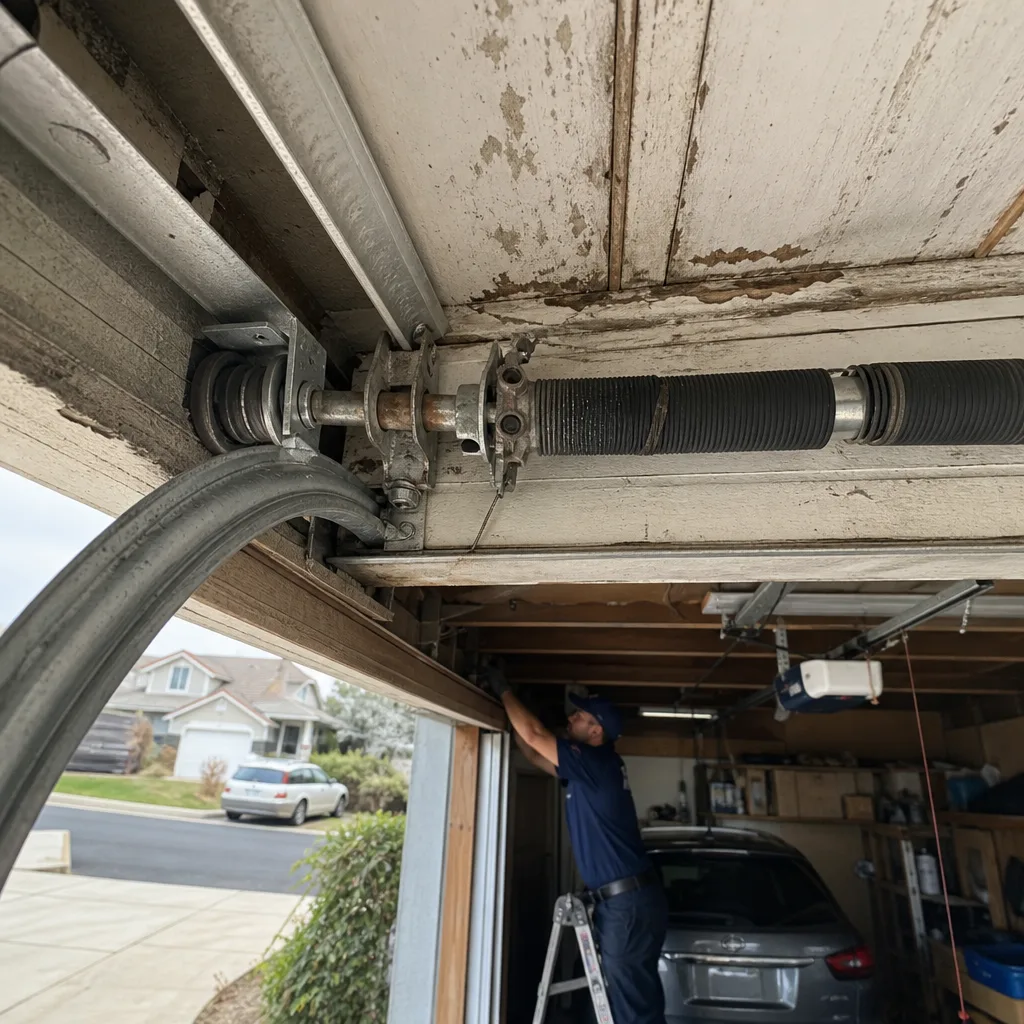
Surface rust looks like a reddish-brown dust or film on the surface of metal parts. It wipes off with a rag, leaving the underlying metal smooth or only slightly pitted. Surface rust on hinge bodies, on the unplated areas of track brackets, and on spring cones is normal for coastal Carlsbad homes. It develops over a season, and it can be managed with a corrosion inhibitor spray or light oil. It is not, by itself, a reason to replace anything.
Structural corrosion is different. It changes the geometry of the part. Look for these signatures on the hardware:
- Scaling: The metal surface has broken into layers that flake away, leaving a rough, uneven texture underneath. This means the corrosion has penetrated beyond the surface and is consuming material.
- Orange-brown powder accumulating in crevices: At hinge pin points, around spring coils, and at cable crimp areas, this powder is the byproduct of active corrosion inside the metal’s stress points. In springs, it’s a sign that the wire’s internal structure is being eaten away while under load, which is genuinely dangerous.
- Reduced diameter at any point: If a bolt, cable, or spring coil looks thinner at one point than the rest, that’s material loss. On a cable, compare the cable’s thickness near the bottom bracket to its thickness near the drum. A visibly thinner section means reduced load capacity.
- White or chalky residue on aluminum parts: Aluminum doesn’t rust red; it corrodes into a white, powdery oxide. Track brackets and some hinge assemblies use aluminum components. White scaling on those parts is aluminum corrosion, and it weakens the metal just as rust weakens steel.
The bracket inspection is the highest-value check most Carlsbad homeowners never do. There are four corner brackets holding the track system to the wall, plus the two bottom brackets holding the cables to the door. Run your eyes over all six. If any bracket shows scaling, reduced thickness, or movement when the door is in motion, schedule a professional assessment. Bracket failure is avoidable with inspection, and catastrophic when missed: a worn bracket can release while the door is moving, dropping one side of the door and taking the cable with it.
After several years of service calls across Carlsbad, from Aviara down to south Carlsbad, we can say this confidently: the homes that get annual corrosion checks have far fewer emergency calls. The homes that don’t see their garage door hardware fail in predictable, preventable ways.
Triage: Same-Week Repair vs. Same-Day Emergency
Not every warning sign requires an emergency call, and not every quiet door is a healthy door. Knowing which category a symptom falls into saves money and stress. Here’s the triage framework we use when Carlsbad homeowners describe symptoms on the phone, distilled into a decision tool.
Same-week repair means the component is degrading, the door still operates safely, and scheduling a repair within five to seven days is appropriate. These symptoms fit:
- A door that drifts down slightly after opening but still opens and closes normally.
- A single noisy roller or hinge that changes sound with door speed but doesn’t bind.
- A bottom seal that’s cracked or lifting but not fully detached.
- Early cable birdcaging with a section under an inch and no rust at fittings.
- An opener that hesitates slightly on start but still completes full cycles reliably.
- Surface rust on brackets and spring cones that wipes off with a rag.
Same-day emergency means the situation is dangerous or the door is non-functional in a way that risks property or safety. These symptoms warrant an immediate call:
- A cable has slipped off its drum or is visibly unspooling while the door is open. Do not operate the door.
- A spring has broken, indicated by a loud bang and a door that won’t lift, or lifts only a few inches.
- The door drops suddenly when closing or falls unevenly, one corner leading significantly.
- A bottom bracket has separated from the door panel, leaving the cable slack.
- The door is grinding against the track or binding hard enough to flex the panels.
- Any situation where the door is stuck open and the garage is unsecurable.
The underlying principle: if you can operate the door safely and the issue is incremental, same-week scheduling is fine. If the door is doing something you wouldn’t want your child standing near, that’s the emergency category. Trust that instinct. It’s usually right.
In Carlsbad, emergency calls spike during the winter months when the temperature swing between warm afternoons and cold marine-layer nights expands and contracts the metal parts, accelerating fatigue. The doors that were warned and ignored fail first.
Common Mistakes to Avoid
- Lubricating a failing roller to make the noise stop. Lubricant masks the symptom without fixing the bearing. The roller continues to slide rather than roll, wearing a flat spot into the wheel and eventually damaging the track’s inner surface. Replace the roller, then lubricate the new one.
- Tightening spring hardware or adjusting tension as a DIY project. Torsion springs store more than enough energy to cause serious injury. The winding bars, the technique, and the safety procedure are not discoverable through YouTube in a way that compensates for real supervision. This is the one area where experienced technicians will plainly tell you not to attempt it.
- Cranking up the opener force setting to stop a reversing door. The reversing function is a safety threshold, not an annoyance. A door that reverses because it detects resistance is signaling a mechanical problem. Raising the force limit turns the opener into a machine that will push through obstructions, including a child or a pet, rather than stopping.
- Ignoring the marine layer as a contributing factor. In Carlsbad, the “little bit of moisture” in the air is doing measurable work on your door hardware year-round. Doors in coastal neighborhoods fail faster than the same door would in an inland location. Compensate with more frequent inspection, not less.
- Assuming a quiet door is a healthy door. The earliest signs of spring fatigue and cable corrosion are often silent. The door drifts a little, or the cable’s strands lift slightly, and there’s no sound at all. Noise is one warning channel. There are others.
- Calling for replacement when a repair would extend the door’s life by years. Brand-agnostic repair means fixing what’s fixable. A stripped opener gear, a worn roller set, a failing bottom seal: these are repairs, not replacement triggers. Some companies push replacement because margins are higher. We work on what you already have, and that includes knowing when a door still has real life left in it.
- Testing the door’s balance by pulling the release cord from underneath the opener. The correct way to test balance is to disengage the opener with the door closed and then carefully lift manually from a safe position, not from directly beneath the door’s travel path. If a spring is near failure, being under the door when releasing tension is the worst place to be.
When to Call a Professional
Call a technician when any of the symptoms above move from occasional to consistent, or when the door’s behavior changes in a way you can describe concretely. “It sounds different than last week” is a valid reason to schedule an inspection. So is “the door drifts down an inch, and it didn’t before.” Specific descriptions help a good technician arrive with the right parts. In Carlsbad, at Tradewind Garage Door Repair, we see the full range from single-family homes in Aviara to attached garages in Bressi Ranch, and the common thread is that caught-early repairs cost dramatically less than deferred ones. We work on LiftMaster, Chamberlain, Genie, and Clopay systems among others, and the installation side of our Carlsbad work stays grounded in repair-first honesty: if the door can run another five years with a $200 repair, that’s the recommendation. Tradewind Garage Door Repair offers free estimates in Carlsbad. Call (833) 476-2475 to schedule one.
Frequently Asked Questions
Spring replacement in Carlsbad typically runs $180 to $340 depending on spring size, door weight, and whether you have a single torsion spring or a dual-spring setup. The price is quoted and agreed before any work starts, and estimates are free. Call (833) 476-2475 for an exact quote on your door.
Yes. Broken spring calls are same-day emergencies at Tradewind because a door with a snapped spring is unsecurable and unsafe to operate. Our team in Carlsbad carries springs in the common sizes on the truck, so most spring replacements are completed in a single visit. Call (833) 476-2475 as soon as it happens.
No. We diagnose the issue, explain what needs replacement, and give you the full price before any work begins. That price covers parts and labor. If we find additional problems during the repair, we stop and discuss them before proceeding. You never open an invoice that’s higher than the number you approved.
Every 12 months is a sound minimum for Carlsbad’s salt-influenced environment. Coastal corrosion moves faster than inland wear, and an annual check catches bracket corrosion, seal degradation, and cable birdcaging before they become failures. The monthly 10-second response test plus an annual professional look is a practical combination.
The most common failure we see in Carlsbad is seal-related rust on the bottom panel and its hardware. The weather seal fails, damp air works on the metal through fall and winter, and by spring the bottom panel shows bubbling and the brackets are corroded. It’s a preventable chain that starts with a $40 seal replacement.
In most cases, yes. We replace doors on existing LiftMaster, Chamberlain, Genie, and Craftsman openers regularly, and the opener only needs replacement if its own components are failing. That’s the brand-agnostic approach: we don’t sell you an opener you don’t need just because you’re installing a new door.
The Bottom Line
Garage doors in Carlsbad don’t fail silently. They drift, they hesitate, they buzz, they rust, they sag. The warning signs are learnable, and the monthly response time test takes half a minute. The coastal climate accelerates the whole wear cycle, which means Carlsbad homeowners benefit more than most from paying attention early. A roller caught before it seizes, a spring caught before it snaps, a cable caught before it birdcages: these are the differences between a small repair and a major one. The underlying principle is consistent: repair first, replace only when it makes sense, and tend to what you already have. Your garage door will tell you what it needs. The skill is listening before the warning turns into a Sunday morning emergency.
Written by the team at Tradewind Garage Door Repair, serving Carlsbad since 2015.
See the difference
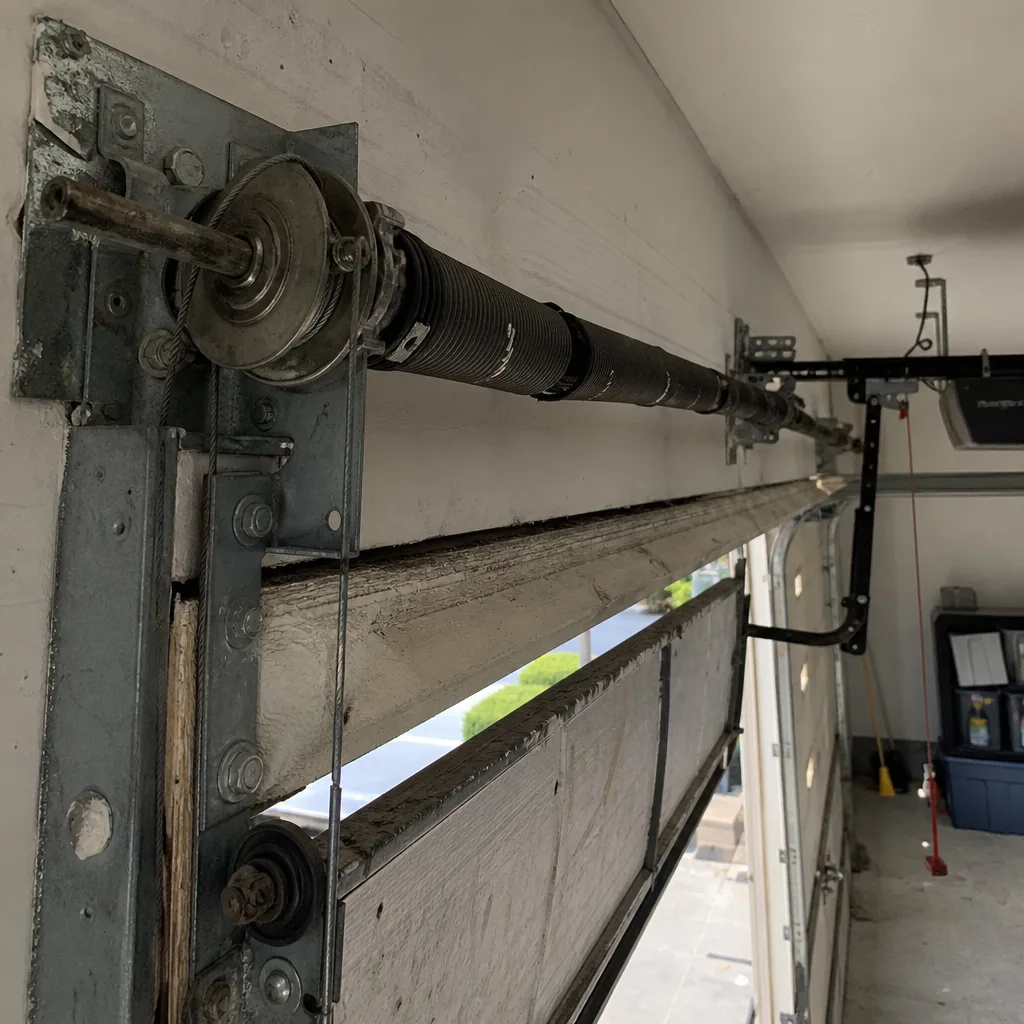 Before
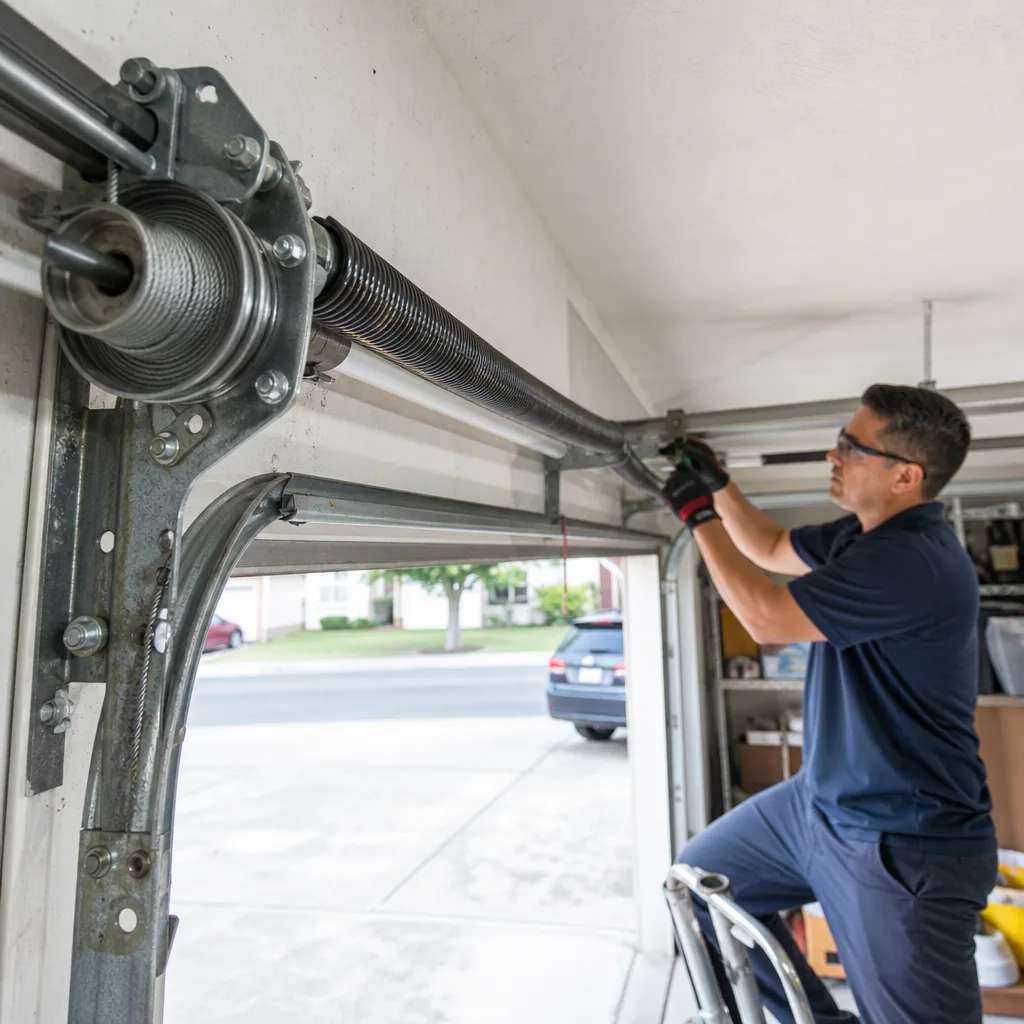 After
 Before
 After
 Before
 After